
Archives For November 30, 1999

After landing in Boston two weeks ago to start my summer internship, I kept my bags packed for Washington D.C. and National Golf Day 2014 on May 21st. While on Capitol Hill, I had the opportunity to attend Congressional meetings, witness American government firsthand and watch lobbyist Brad Steele in action. Oh, and I also got to meet one of golf’s living legends, Jack Nicklaus.
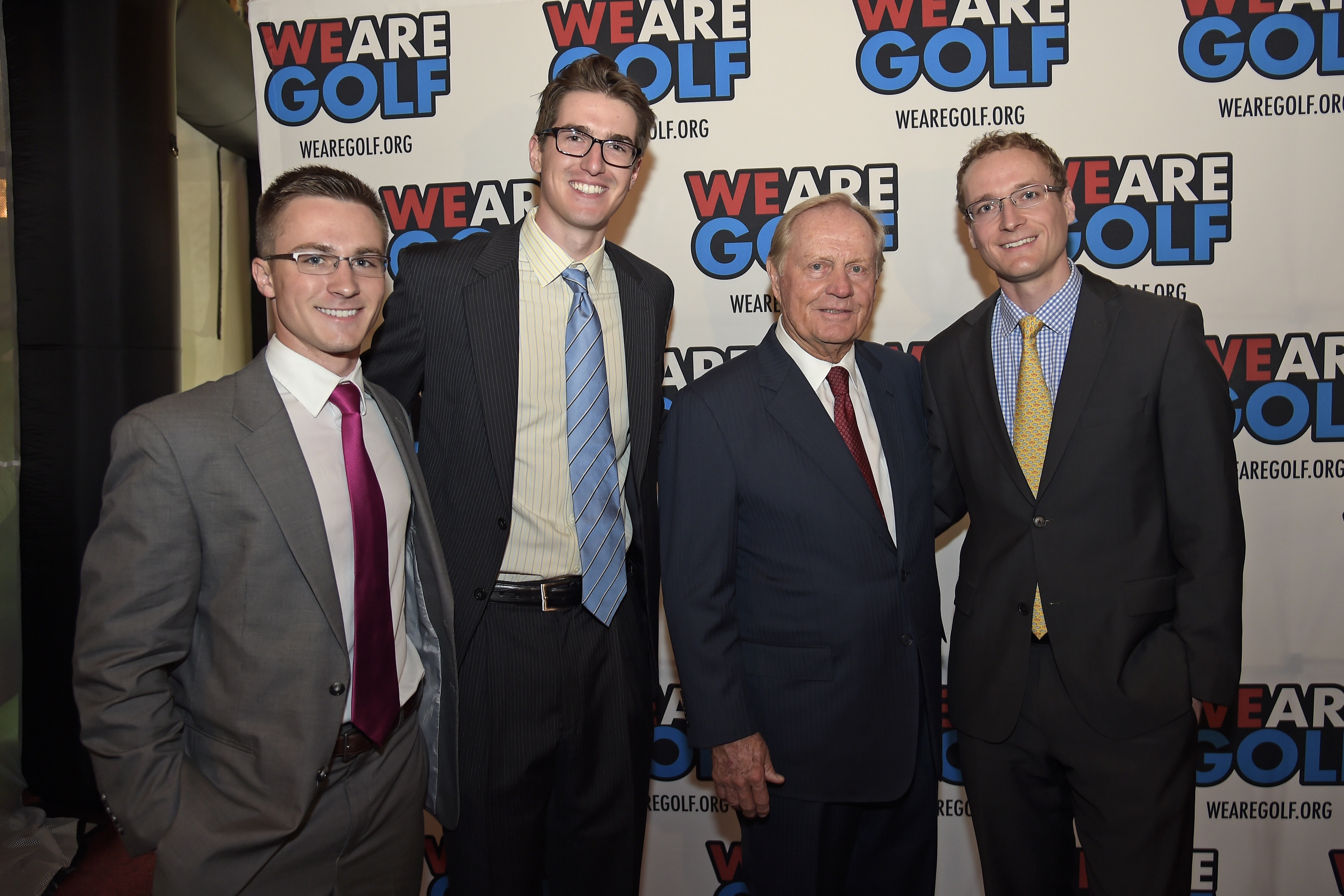
The Nextgengolf team got to meet one of golf's living legends at National Golf Day 2014, Jack Nicklaus.

While I wasn’t hanging out with the Golden Bear, I did learn a few things. My key takeaway from the event is that golf is IMPACTFUL in a number of ways.

Economic Impact:

Sure, it’s not surprising that golf has what many might call a “profound” impact on the American economy, but the cash value of the U.S. golf industry has more zeros than a Chicago Cubs box score. Well, that might be an exaggeration, but the fact that nearly 2 million Americans depend on the game of golf to earn a living is simply amazing. What’s even better is that the majority of the folks working in golf aren’t rich course owners or golf course management tycoons; they are the food and beverage directors, clubhouse managers and groundskeepers who work 60+ hours a week to make ends meet.

  • $178.8 Billion: Total economic impact of golf in America including direct, indirect and induced impacts
  • $68.8 Billion: Total size of the U.S. golf economy
  • $55.6 Billion: Total wage income from American workers in the golf industry
  • $20.6 Billion: Total travel expenditures produced by the golf industry
  • $5.6 Billion: Total amount spent on golf supplies
  • $523 Million: Total spent on golf-related media including books, magazines, DVDs, etc.
  • 1.96 Million: Total number of Americans who work in golf
  • 15,000: Approximate number of U.S. golf facilities — more than 10,000 open to the public
  • $26: median green fee in the U.S.

***Economic Impact by State***

Charitable Impact:

Again, you might not be surprised that the game of golf generates A LOT of money for charity, but you might not know that in 2011, golf’s charitable impact was $3.9 billion, greater than the MLB, NFL, NBA and NHL combined. During that year, a total of 143,000 charity events were hosted on 12,000 golf facilities across the country raising $26,300 on average!

While some of the money is reinvested into grow-the-game programs, about 95% of all money raised by golf related functions goes outside of the game to organizations such as hospitals, youth development programs and food banks.

Health Impact:

If you have every played golf on a competitive level, you may have found yourself defending the game from people who claim it’s not a sport. We can put that debate to rest now. Walking one 18-hole round of golf is the equivalent to running over three miles and could burn up to 2,000 calories — the same as a McDonald’s Big Mac, McDouble, large fries and chocolate shake.

To compare apples to apples, walking one round of golf is more physical activity than a 90 minute game of soccer. An average American man weighing 195 pounds will burn about 1400 calories on the pitch, 30-percent fewer than an 18-hole trek.

Environmental Impact:

When you’re not hitting it straight off the tee, any course can seem big, but the average 18-hole track is over 120 football fields in size. And there’s always that guy in every foursome who uses the “I just want to see the entire course” excuse when he sprays every shot in a different direction, but the nature you find on a golf course can actually be pretty cool.

I’ve often wondered, though, how much water is wasted keeping the course green, but that might surprise you as well. Only 3 out of every 20 courses use municipal water supplies, and 92-percent of facilities are using wetting agents to aid in water retention to maximize the efficiency of their water supply.

So maybe people who say golf isn’t a sport are right. It’s more than that.

For those who don’t play the game, golf is a highly exclusive society of privileged people who earn six-figure salaries and conduct business meetings on the course. For those who do play golf, it’s just funny how people could think that. This summer, I will be working with Steve Mona, CEO of the World Golf Foundation, to promote the #Fun of golf through social media and redefine the way people look at the game.

GOLF.jpg

The fact is, there is no “typical golfer.” If our game will survive and grow into the future, we will have to tackle stereotypes that plague the sport. One particular demographic that the golf industry has missed out on in recent years is 18- to 29-year-olds.

According to research by the National Golf Foundation, only about 27-percent of active golfers fall into the millennial generation, while around 41-percent of the U.S. population is comprised of millennials. So where is the disconnect between golf and America’s young working adults?

Until recently, marketing efforts to generate new golfers have completely whiffed on the millennial generation, but behind the efforts of many industry leaders, the landscape of golf will be shifted immensely throughout the next several years. New ways of reaching this age range will be vital to recovering from the 30-percent decrease in participation among 18- to 34-year-olds over the past two decades.

PARTICIPATION BY AGE.png

As the Golf 20/20 intern, that’s where I come in. Alongside Nextgengolf and the World Golf Foundation, I will be working to provide social media marketing consulting to members of the golf industry who are interested in capturing the millennial generation.

So can effective social media marketing strategies return golf to it’s pinnacle? Not on it’s own. However, in addition to industry initiatives such as We Are Golf and Get Golf Ready, the missing generation might return to the game in foreseeable future. With 90-percent of 18- to 29-year-olds on social networks, the impact that social media can have on golf can not be denied.

SOCIAL NETWORKING BY AGE.png

Social Media Quick Facts:

  • 172.6 million (68.6%) Americans on social networks in 2014

  • 151.8 million (60.3%) Americans on Facebook in 2014 (next closest country is India at 108.9 million)

  • 48.2 million (19.2%) Americans on Twitter in 2014 (next closest country is Japan at 19.5 million)

  • 1.1 billion Facebook users worldwide in 2014, projected to hit 1.6 billion by 2018

  • 2.3 billion Twitter users worldwide in 2014, projected to hit 3.9 billion by 2018

  • 12.7% of all social media activity worldwide is from Twitter

Many avid golfers were born with golf shoes on their feet and learned to swing a club before mastering the art of walking, but since 2003 — especially after the recession in 2007 — the number of golfers in the United States has tanked by 4.8 million or around 16-percent.

While the numbers may be bleak, the general consensus among golfers on the future of the game has remained positive. According to a report released by the Sports Illustrated Golf Group, and decreasing number of golfers are concerned about the challenges facing the industry in regards to growing overall participation.

I happen to agree as the golf industry is choosing to face these challenges head on, and I am excited and feel very privileged to be working alongside some of most influential people in golf to revitalize the game that I have developed a passion for.

Please follow my blog posts throughout this summer as I’ll be documenting our progress toward the next generation of golf.

About Me:

My name is Chase Russell, and I just completed my junior year at Iowa State University where I study at the Greenlee School of Journalism and Communication while pursuing a minor in business. In addition to my work this summer through the Golf 20/20 internship program, I am currently serving a one-year term as the 2014 President of the National Collegiate Club Golf Association.

Originally from Colfax, Iowa (population: 2,061), I will be living and working in Boston at the Nextgengolf offices. While growing up in small town central Iowa, I got my start in golf at the age of 13 when I joined the Colfax Country Club, a small nine-hole course that shared a fence line with my father’s farm.

I have been an avid golfer ever since, as I went on to charter the Iowa State University club golf team during my sophomore year. With graduation less than 12 months away, I am looking to turn my hobby and passion into a career opportunity, and I couldn’t be happier to have the chance to serve the game as the Golf 20/20 intern this summer.