Archives For November 30, 1999

Blogging everything under the sun and on the course related to the greatest game ever played.

It’s a perfect summer Sunday afternoon, and you’re enjoying the sun and the company of your best friends on the golf course. Maybe you have a small side wager with someone in the group, and you’re all square heading to the 18th tee. Your competitor grooves one right through the heart of the fairway, but your driver fails you for the first time all day, leaving your tee shot directly behind a tree in the left rough.

So what do you do now: shape a three iron punch shot around the tree, play a bump-and-run safely into the fairway or … pull the foot wedge out of the bag? There are a million rules in golf, and the last option is a blatant violation of some kind. But what if it wasn’t?

In FootGolf, the trusty foot wedge is the only option on every shot. Founded in 2011, the American FootGolf League is one of the most rapidly growing new sports in the U.S. By combining the most popular sport in the world with the traditional game of golf, FootGolf has seen high participation rates among millennials.

Millennial Golf - FootGolf (2)

Photos Courtesy of the American FootGolf League


According to Roberto Balestrini, founder of the AFGL, 18 to 35-year-olds enjoy the sport for its laid back, social atmosphere. Balestrini has also said that FootGolf participants generally seem more interested in popping the cork off a bottle of champagne than competing.

  • 90-percent of players are between 18 and 35.
  • 35-percent of millennial footgolfers are female.
  • There are FootGolf courses in 31 states.
  • In addition to the U.S., there are FootGolf courses in Canada, Mexico and Puerto Rico.

With FootGolf on the rise, how does the synergy between this hybrid sport and the traditional game affect golf’s overall popularity? According to many accounts, FootGolf seems to be a gateway sport that is introducing many young people to golf.

“It is my job to get these young people to the course through FootGolf, and from there they naturally want to learn how to play golf,” Balestrini said passionately. “Once they are on the fairway, they never want to leave.”

Unlike golf, the majority of people — at some point in their lives — have played soccer on some level, making FootGolf a much easier sport to learn than golf. FootGolf has the potential to be golf’s bunny slope equivalent to skiing, which makes the sport much more inviting to new players.

In short, millennial golf seems to be rising in popularity alongside FootGolf.

Whether you’re an avid golfer, a recreational golfer or not a golfer at all, everyone has their own definition of the game. You might think that golf is the greatest game every played, but then again, you may argue that it’s not even a sport.

I’m not trying to change anyone’s opinion – in fact, I think that’s part of what makes golf great. We could ask all 25 million golfers in America what the game means to them, and I wouldn’t be shocked if we receive 25 million different answers. So rather than trying to brand the game with a single definition, we should ask: what is golf to you?

Next week marks the start of the inaugural GOLF 20/20 Ambassadors program, a network of 18 to 29-year-olds focused on determining what #GOLFIS to the millennial generation.

https://twitter.com/ChaseMRussell/status/476541586562899968

For me, #GOLFIS

  1. Challenging: I’m not sure if this is a good or a bad thing, but the pursuit of that illusive birdie makes it worth suffering through all the double bogeys, lost balls and pond shots.
  2. Friendship: It’s the reason that I started golfing, and it’s the reason that I continue to play. So many of my favorite memories are on the golf course with my closest friends.
  3. The game of a lifetime: You can start playing as soon as someone puts a club in your hands, and you can play until you can’t pick the club up. I might be the only college students I know who’s excited to get old and play golf everyday at 5:30 a.m.
  4. A love affair: The only thing more intense than my passion for the game each summer throughout high school was my golfer’s tan. After 36 holes each day for three months, my left hand was probably whiter than my glove.
  5. Fun: Whether I’m breaking 80 – which is a big deal for me – or riding the bogey train, golf is always fun. Four or fives hours to play a round of golf might seem like a long time, but the 18th-hole always comes too soon.

Join the conversation, and tell us what #GOLFIS to you.

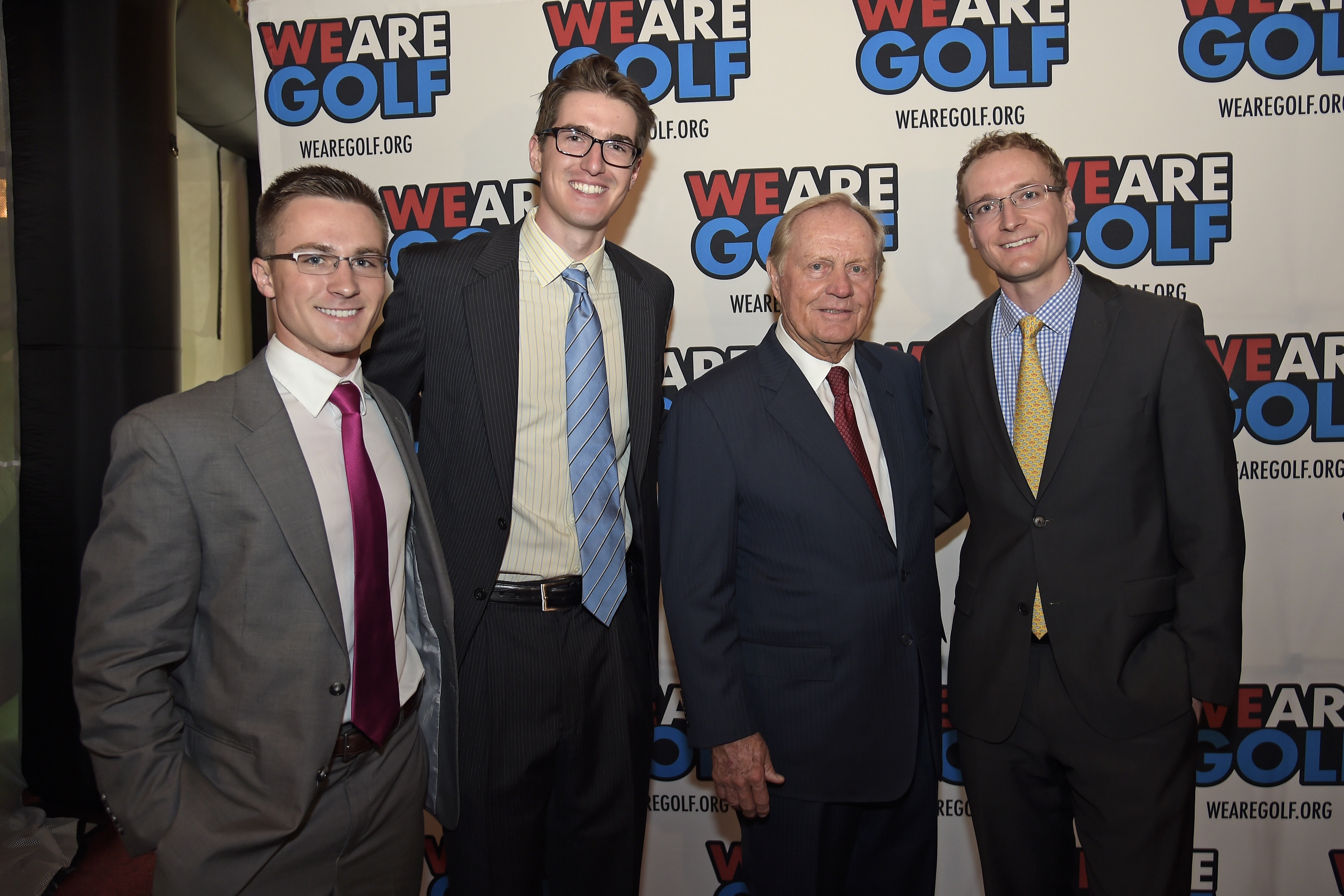
After landing in Boston two weeks ago to start my summer internship, I kept my bags packed for Washington D.C. and National Golf Day 2014 on May 21st. While on Capitol Hill, I had the opportunity to attend Congressional meetings, witness American government firsthand and watch lobbyist Brad Steele in action. Oh, and I also got to meet one of golf’s living legends, Jack Nicklaus.

The Nextgengolf team got to meet one of golf's living legends at National Golf Day 2014, Jack Nicklaus.

While I wasn’t hanging out with the Golden Bear, I did learn a few things. My key takeaway from the event is that golf is IMPACTFUL in a number of ways.

Economic Impact:

Sure, it’s not surprising that golf has what many might call a “profound” impact on the American economy, but the cash value of the U.S. golf industry has more zeros than a Chicago Cubs box score. Well, that might be an exaggeration, but the fact that nearly 2 million Americans depend on the game of golf to earn a living is simply amazing. What’s even better is that the majority of the folks working in golf aren’t rich course owners or golf course management tycoons; they are the food and beverage directors, clubhouse managers and groundskeepers who work 60+ hours a week to make ends meet.

  • $178.8 Billion: Total economic impact of golf in America including direct, indirect and induced impacts
  • $68.8 Billion: Total size of the U.S. golf economy
  • $55.6 Billion: Total wage income from American workers in the golf industry
  • $20.6 Billion: Total travel expenditures produced by the golf industry
  • $5.6 Billion: Total amount spent on golf supplies
  • $523 Million: Total spent on golf-related media including books, magazines, DVDs, etc.
  • 1.96 Million: Total number of Americans who work in golf
  • 15,000: Approximate number of U.S. golf facilities — more than 10,000 open to the public
  • $26: median green fee in the U.S.

***Economic Impact by State***

Charitable Impact:

Again, you might not be surprised that the game of golf generates A LOT of money for charity, but you might not know that in 2011, golf’s charitable impact was $3.9 billion, greater than the MLB, NFL, NBA and NHL combined. During that year, a total of 143,000 charity events were hosted on 12,000 golf facilities across the country raising $26,300 on average!

While some of the money is reinvested into grow-the-game programs, about 95% of all money raised by golf related functions goes outside of the game to organizations such as hospitals, youth development programs and food banks.

Health Impact:

If you have every played golf on a competitive level, you may have found yourself defending the game from people who claim it’s not a sport. We can put that debate to rest now. Walking one 18-hole round of golf is the equivalent to running over three miles and could burn up to 2,000 calories — the same as a McDonald’s Big Mac, McDouble, large fries and chocolate shake.

To compare apples to apples, walking one round of golf is more physical activity than a 90 minute game of soccer. An average American man weighing 195 pounds will burn about 1400 calories on the pitch, 30-percent fewer than an 18-hole trek.

Environmental Impact:

When you’re not hitting it straight off the tee, any course can seem big, but the average 18-hole track is over 120 football fields in size. And there’s always that guy in every foursome who uses the “I just want to see the entire course” excuse when he sprays every shot in a different direction, but the nature you find on a golf course can actually be pretty cool.

I’ve often wondered, though, how much water is wasted keeping the course green, but that might surprise you as well. Only 3 out of every 20 courses use municipal water supplies, and 92-percent of facilities are using wetting agents to aid in water retention to maximize the efficiency of their water supply.

So maybe people who say golf isn’t a sport are right. It’s more than that.